Choose which cookies you allow us to use. You can update this at any time via the cookie settings link in the footer.
Strictly Necessary
Required for the site to function correctly. Cannot be disabled.
Analytics
Helps us understand how visitors use the site (Google Analytics 4). No personal data is sold.
Marketing & Advertising
Used for Google Ads and to serve relevant advertising. Requires your consent under UK PECR.
Racing
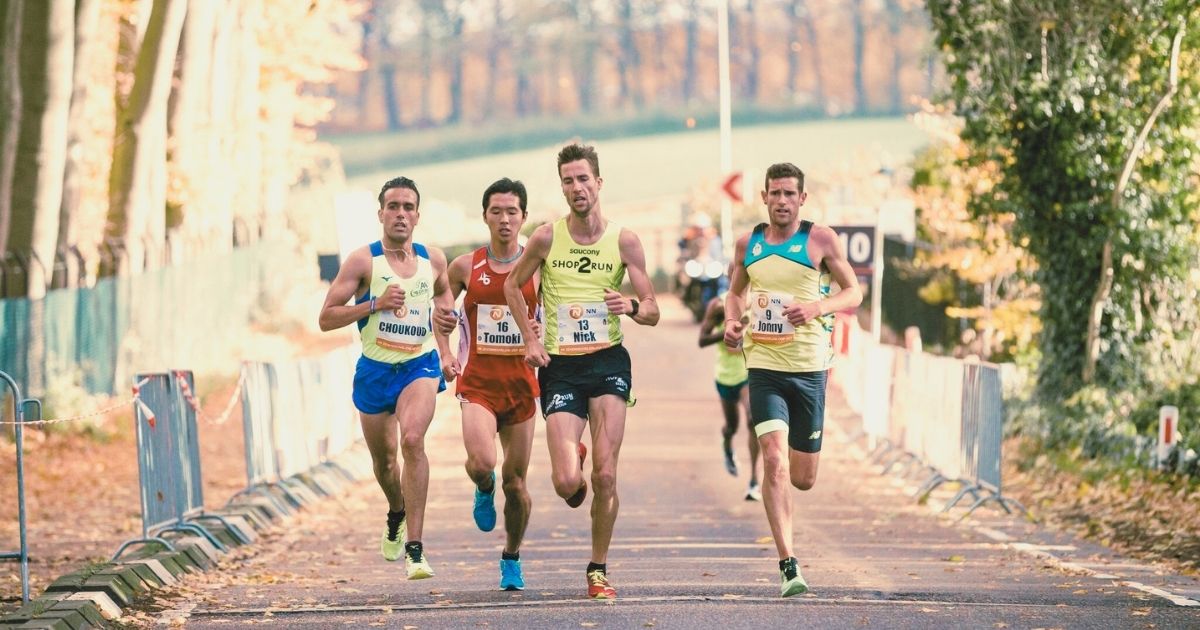
Summer heat gone, winter not yet here, and the fastest road racing calendar on the planet. If I had to pick one block of the year to train through, it would be this one every time.
The Short Answer
In One Paragraph
Autumn is the best running season because the conditions are close to ideal. Temperatures of 8 to 15°C are near optimal for endurance performance, the humidity that ruins summer sessions has gone, and the dark, cold, exposed months are still ahead. It is also when the fastest road racing of the year happens, from the Great North Run in September through the major autumn marathons in Berlin, Amsterdam and Frankfurt to the fast 10Ks in November.
If you asked me to pick one block of the year to train through, it would be this one every time. Here is why, and how to get the most out of it.
The Conditions
The heat has gone. Summer running in the UK is a compromise. You are either up at 5am to beat the temperature or you are running a session in conditions that add 20 to 30 seconds a mile for the same effort. Autumn hands you back the ability to run at a time that suits you and get an honest read on your fitness. Cool, still air is genuinely faster: this is why almost every marathon world record has been set in autumn or spring, not July.
Winter is not here yet. October and early November give you a window where you can still get out in daylight most days, the ground is not frozen, and you do not need three layers and a head torch for every run. That window is short, which is exactly why it is worth using properly.
The racing is the best of the year. From mid-September onwards the road racing calendar is stacked. Cool conditions plus flat, fast courses plus a full summer of training behind everyone means autumn is when personal bests happen.
And it just feels good. This is not a training principle and it does not belong in a periodisation chart, but it matters. Crisp mornings, low sun through the trees, dry leaves underfoot, that first run where you need a long sleeve and it feels welcome rather than necessary. Enjoyment is the thing that keeps people running for decades, and autumn delivers more of it than any other season.
The Calendar
These are the races I look forward to most, and the ones I point athletes towards.
| Race | Distance | Typical Timing | Why It Matters |
|---|---|---|---|
| Great North Run | Half marathon | Sun 13 Sep 2026 | The world's biggest half marathon, Newcastle to South Shields, and an atmosphere nothing else in the UK matches. |
| Berlin Marathon | Marathon | Last weekend of September | The fastest marathon course in the world and the traditional opener of the autumn major season. |
| Northern Road Relays | Road relay | Late September | The start of the club season proper and one of the best days of the year for team racing. |
| National Road Relays | Road relay | Early October, Sutton Park | Club racing at its best, and a completely different kind of effort to a solo road race. |
| Amsterdam Marathon | Marathon | Third Sunday of October | Flat, fast, finishes in the Olympic Stadium, and consistently produces quick times. |
| Frankfurt Marathon | Marathon | Sun 25 Oct 2026 | Germany's longest-established city marathon and another genuinely fast course. |
| Wilmslow Festive 10K | 10K | Sun 22 Nov 2026 | Flat Cheshire roads and one of my go-to 10Ks. |
| Leeds Abbey Dash | 10K | Sun 29 Nov 2026 | A famous personal best course and the England Athletics 10K Championship event. |
The road relays deserve a mention of their own. They are the antidote to a season of solo racing. You are running for a team, everyone is watching your leg, and it makes you hurt in a way you cannot replicate on your own. If you are in a club and you have never done them, do them.
From The Athlete Side
Autumn is my favourite time of year to train, and it has been for as long as I have been running seriously.
Part of it is the training itself. Coming out of summer, I feel like the handbrake comes off. Sessions that felt like a grind in July because of the heat suddenly click. The same effort produces a quicker pace, and that feedback loop is powerful when you are deep in a marathon build. My Valencia builds have run through exactly this period, and it is the point in the year where I can get the most out of my key sessions on the least total fatigue.
Part of it is the sense of a season starting. From the beginning of September there is a real shift in mood in the running community. The Great North Run kicks it off, then the relays, then the marathons roll through. Everyone has spent the summer building and now it is time to find out what it was worth. I have never lost the excitement of that.
And part of it is much simpler than any of that. There is a particular kind of autumn morning, cold enough to need a long sleeve, still, low sun, dry leaves, where running just feels like the best thing you could be doing. Seventeen marathons in, and that is still why I go out.
"Notice which weeks of the year you actually enjoy the running, and build your hardest training into them."
If you are looking for the one piece of transferable advice here, it is this: motivation is a real training input, and it is much easier to execute a demanding block when you are looking forward to going out of the door.
From The Coach's Side
September fitness surprises people. Athletes who have been grinding through August come to me convinced they have gone backwards, and then the temperature drops and they run a session two weeks later that shows they have been fit the whole time. Summer masks fitness. Autumn reveals it. Do not judge a block on how July felt.
The autumn goal race becomes a full stop. This is the big one. An athlete builds beautifully for a mid-October marathon, runs well, and then does almost nothing for six weeks. By December they have lost most of what took six months to build, and January starts from a lower base than it needed to. The autumn race should be a punctuation mark, not the end of the sentence.
Nobody plans the transition. The shift from autumn to winter running catches people out every single year, and it is entirely predictable. Clocks go back at the end of October, evening running becomes dark running, and the athletes who have not thought about kit, routes or safety in advance simply run less. It is not a motivation problem. It is a logistics problem that looks like a motivation problem.
Watch For This
Racing the whole autumn calendar because it is all so appealing.
The season is genuinely stacked. Half marathon in September, relays in early October, a marathon later that month, a fast 10K in November. I understand the temptation completely, because I feel it too. But every race you add costs you a taper before it and a recovery after it, which means the actual training weeks in between shrink to almost nothing.
The runners who get the most out of autumn pick one goal race and treat the rest as either sharpeners or fun. That does not mean racing once. It means being clear which race you are peaking for and being honest that the others are secondary.
The second mistake, and the one that costs more: treating the autumn goal race as the end of the training year. The best thing you can do for next spring is get back to easy running within a week or two of your autumn marathon, and go into the winter with your aerobic base intact. Winter is where next year's spring races are won, and you cannot start winter well if you have spent November doing nothing. If you want the full picture on how to bridge that gap, our winter running guide picks up exactly where this post ends.
Do This
Exceptions
If you have raced a hard autumn marathon. Everything above about using the good conditions for hard training does not apply in the two to three weeks after a marathon. Take the recovery. The conditions will be almost as good in three weeks. Our guide to marathon recovery time covers what those weeks should actually look like.
If you are injury prone on uneven ground. Autumn trails look idyllic and hide everything underneath. If you have a history of ankle problems, the leaf-covered trail is not the place to be running fast in low light, however good it looks.
If autumn is your busiest work period. Plenty of people have a September to December that is relentless. If that is you, autumn is a maintenance season and spring is your target. Trying to force a peak into your hardest work quarter usually produces neither good training nor good work.
If you are new to running. The advice to load your hardest training into the best conditions assumes you have a base to build on. In your first year, consistency across all seasons matters far more than optimising one of them. If that is you, start with what to do after Couch to 5K.
Common Questions
Yes, autumn is one of the best times to start. Cooler temperatures make early runs more comfortable than summer heat, and starting in September or October gives you two to three months of manageable conditions to build a habit before the hardest winter weather arrives.
Most runners perform best between roughly 8 and 15°C. Performance declines noticeably above about 18°C, particularly in humid conditions, which is why autumn and spring races produce faster times than summer events.
A long-sleeve top or short sleeves with arm sleeves, shorts or light tights, and a lightweight windproof layer for wet or windy days. Dress to feel slightly cold at the start, because you will warm up within about ten minutes.
Wear reflective or light-coloured clothing, use a head torch on unlit routes, run facing oncoming traffic on roads without pavements, tell someone your route, and avoid headphones at high volume near traffic.
The main autumn marathon season runs from late September through October, including Berlin at the end of September and Amsterdam and Frankfurt in October. Most autumn marathon training blocks start between June and July.
Yes, after two to three weeks of genuine recovery. Returning to easy running keeps your aerobic base intact through winter, which means spring training starts from a higher level rather than rebuilding from scratch.
Summary
The conditions in front of you right now are the best you will get all year. What you do with the next eight weeks decides whether you arrive at spring building on something, or starting again.
I coach runners one to one, from first-time marathoners to sub-2:30, and this is exactly the point in the year where having a plan that looks past your next race makes the biggest difference.

Founder of JM Coaching, 2:08:45 marathon runner and Great Britain international. Coaching runners of all abilities since 2013. Read his full profile.
Coaching that treats your autumn race as a punctuation mark, not the end of the sentence.
View Our PackagesStart Today
A coach who plans past your autumn race so winter builds on it rather than resetting from zero. Plans from £60 per month, no minimum term.
View Coaching Packages